Novo Nordisk · 2024–2025
Tool for antiseptic area
A research-led shopfloor assistant that made shift handovers visible, standardised and the process 7% faster.
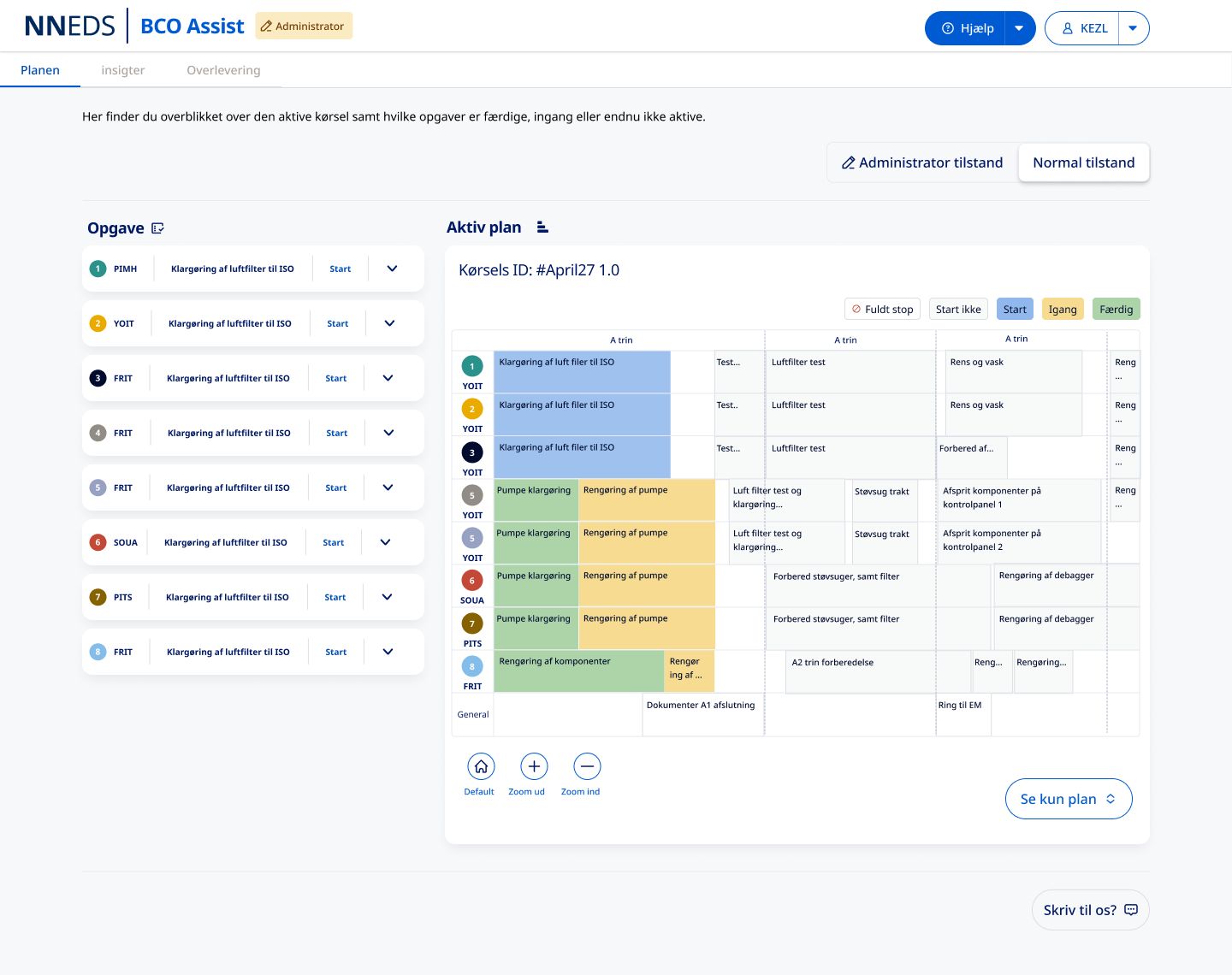
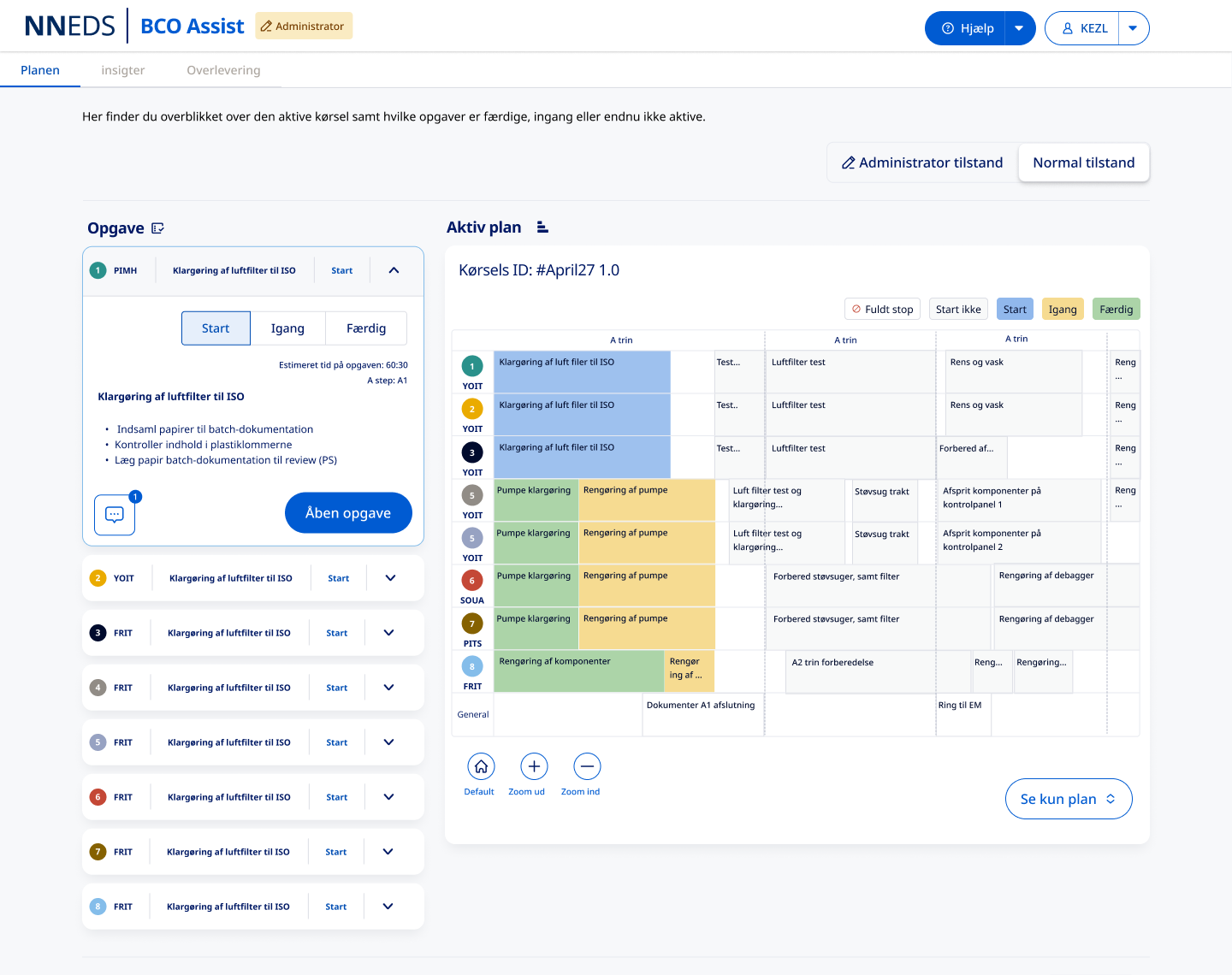
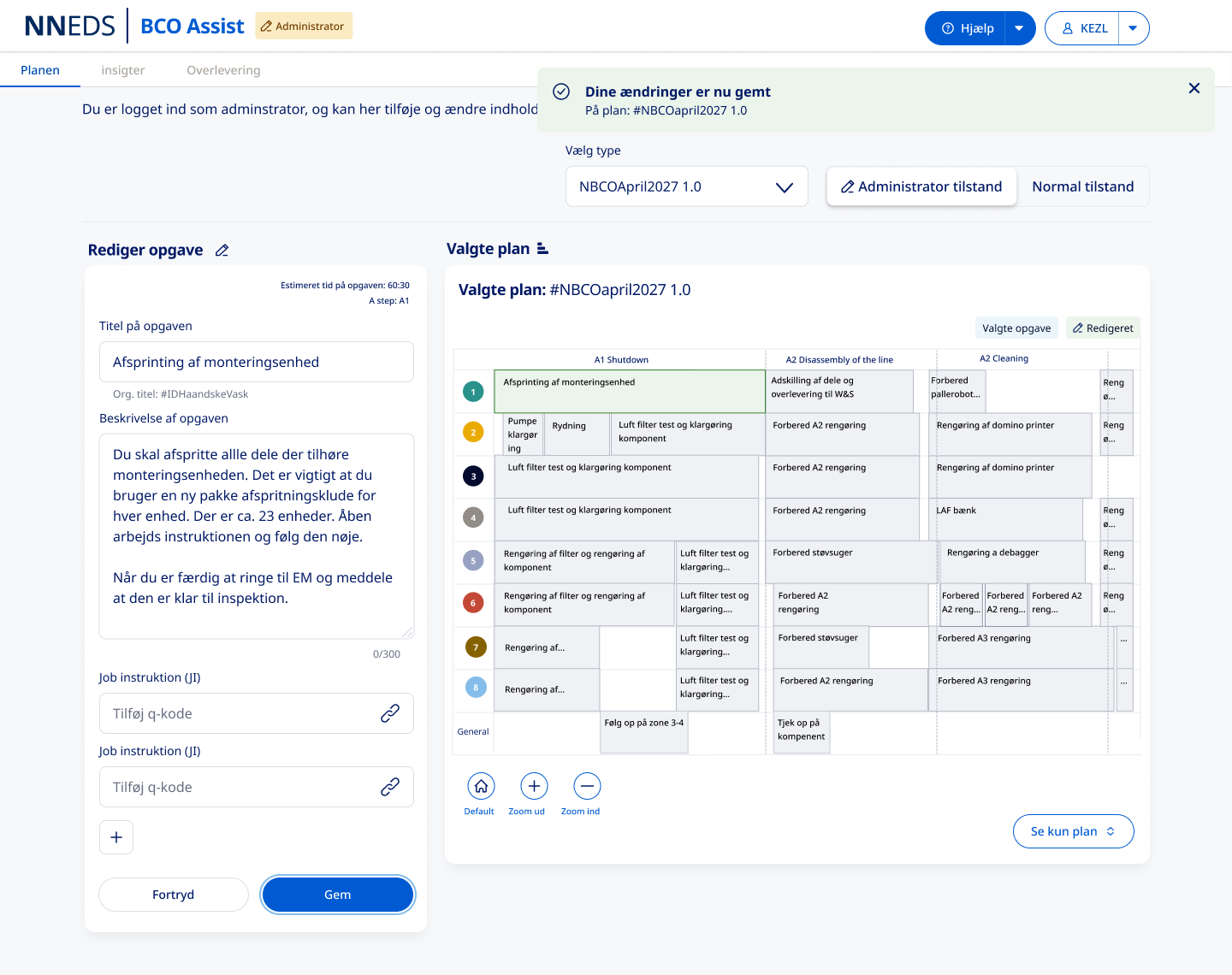
BCO Assist is a digital shopfloor assistant that supports operations during batch change-overs (BCOs) in antiseptic manufacturing. It provides role-based guidance, live task tracking, dependency management and handover support, giving the whole team real-time visibility into a process that used to live in people’s heads and on paper.
Batch change-overs (BCOs) in antiseptic manufacturing depended on manual handovers, verbal briefings, emails and paper notes passed between shifts. Nothing was formalised, so quality and continuity came down to who was on the line and whether the handover got read at all.
The core business problem: there was no visibility into where challenges would arise in the process. Coordinators had to hold the whole line in their heads, who was doing what, which tasks were blocked, with no single source of truth and no shared view of bottlenecks. That missing visibility cost time in every BCO.
- First-ever UX designer embedded in the Pex Analytics team, establishing UX research and design as a practice from scratch.
- Led qualitative and quantitative research: interviews with operators and stakeholders, surveys, and on-the-floor observation.
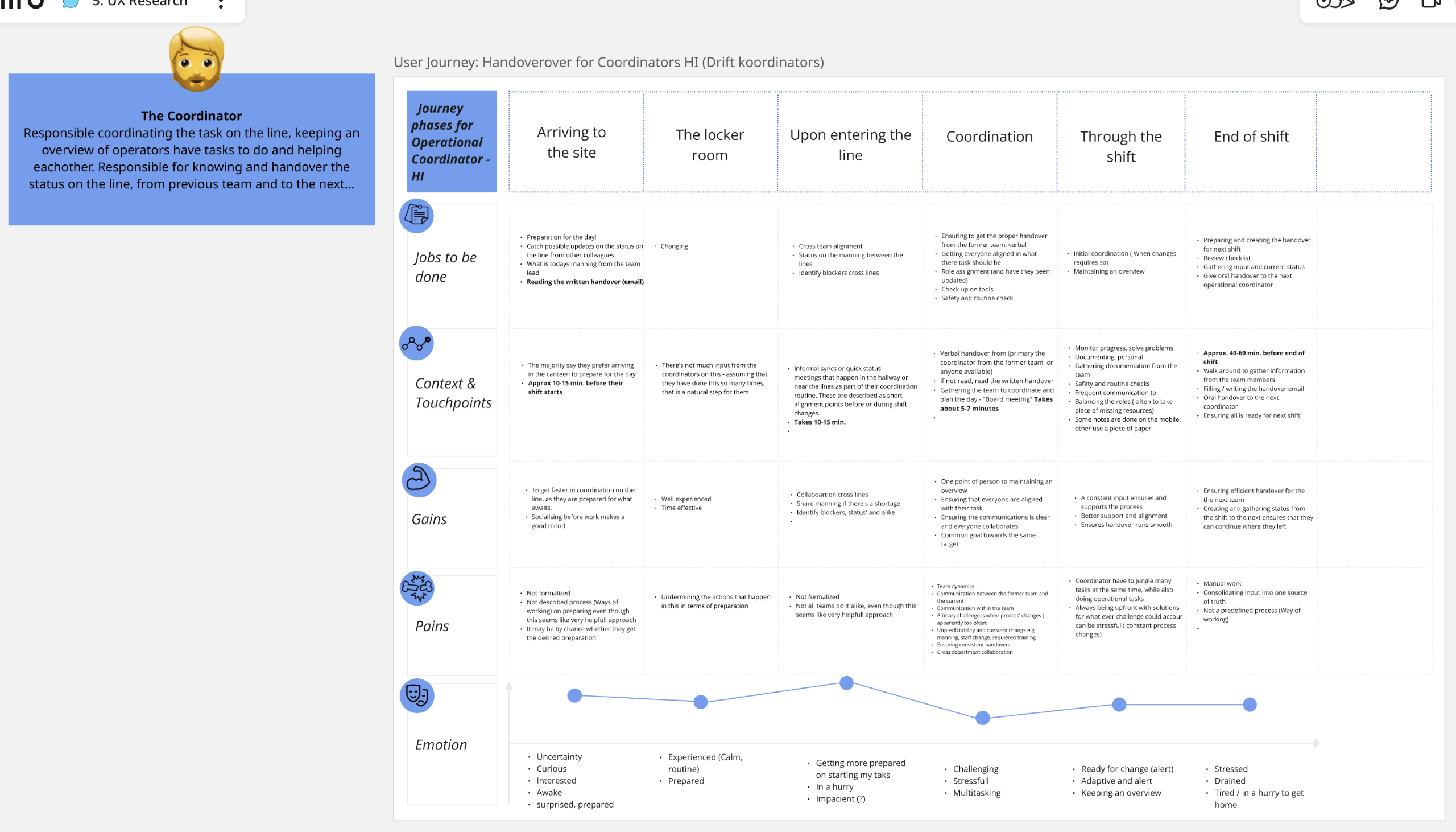
- Built user journey maps, user groups and user profiles to ground the team in real operator behaviour.
- Facilitated Design Thinking workshops and cross-team collaboration for new business opportunities.
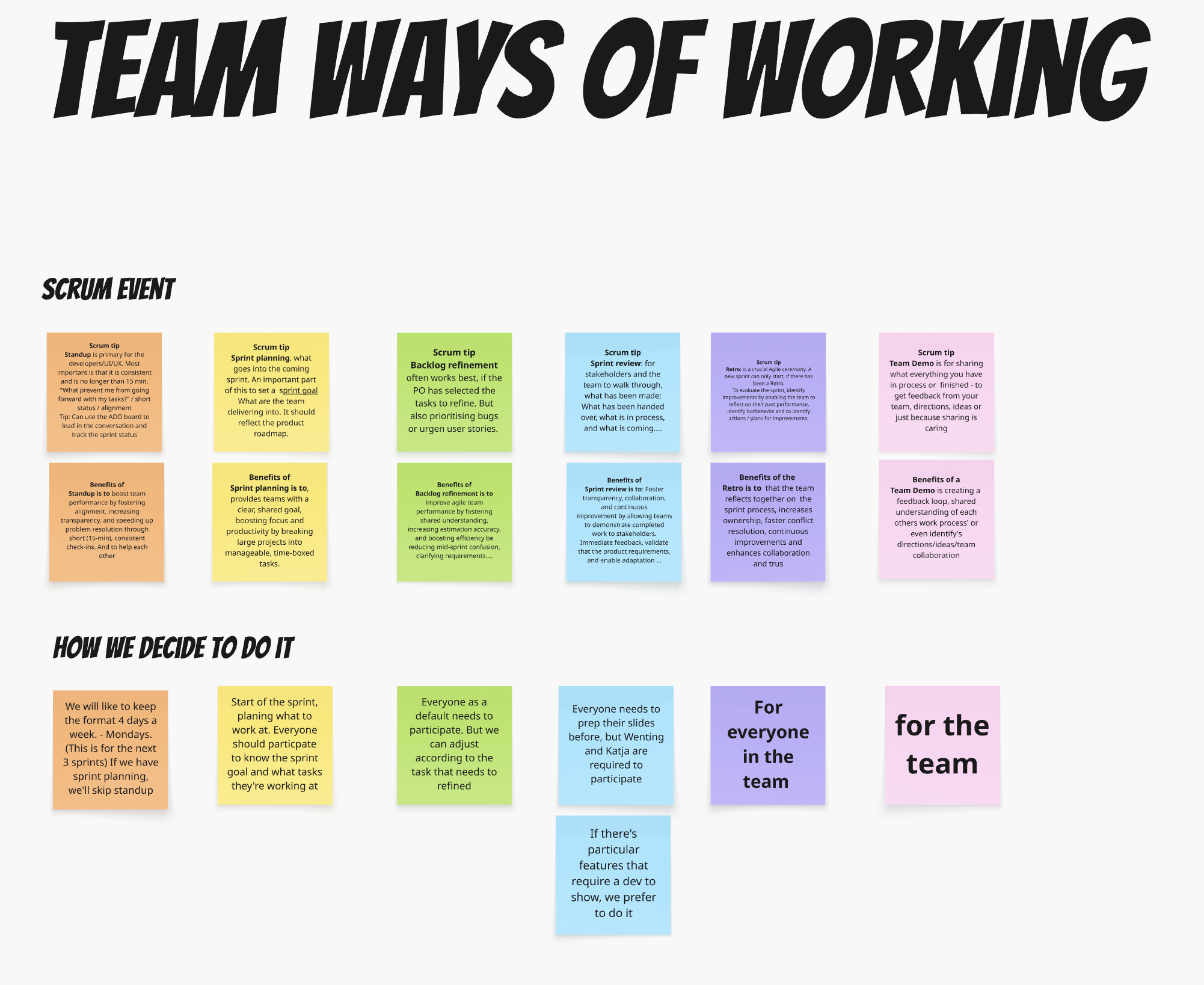
- Drove broader ways-of-working improvements, including Scrum and agile training and facilitation.
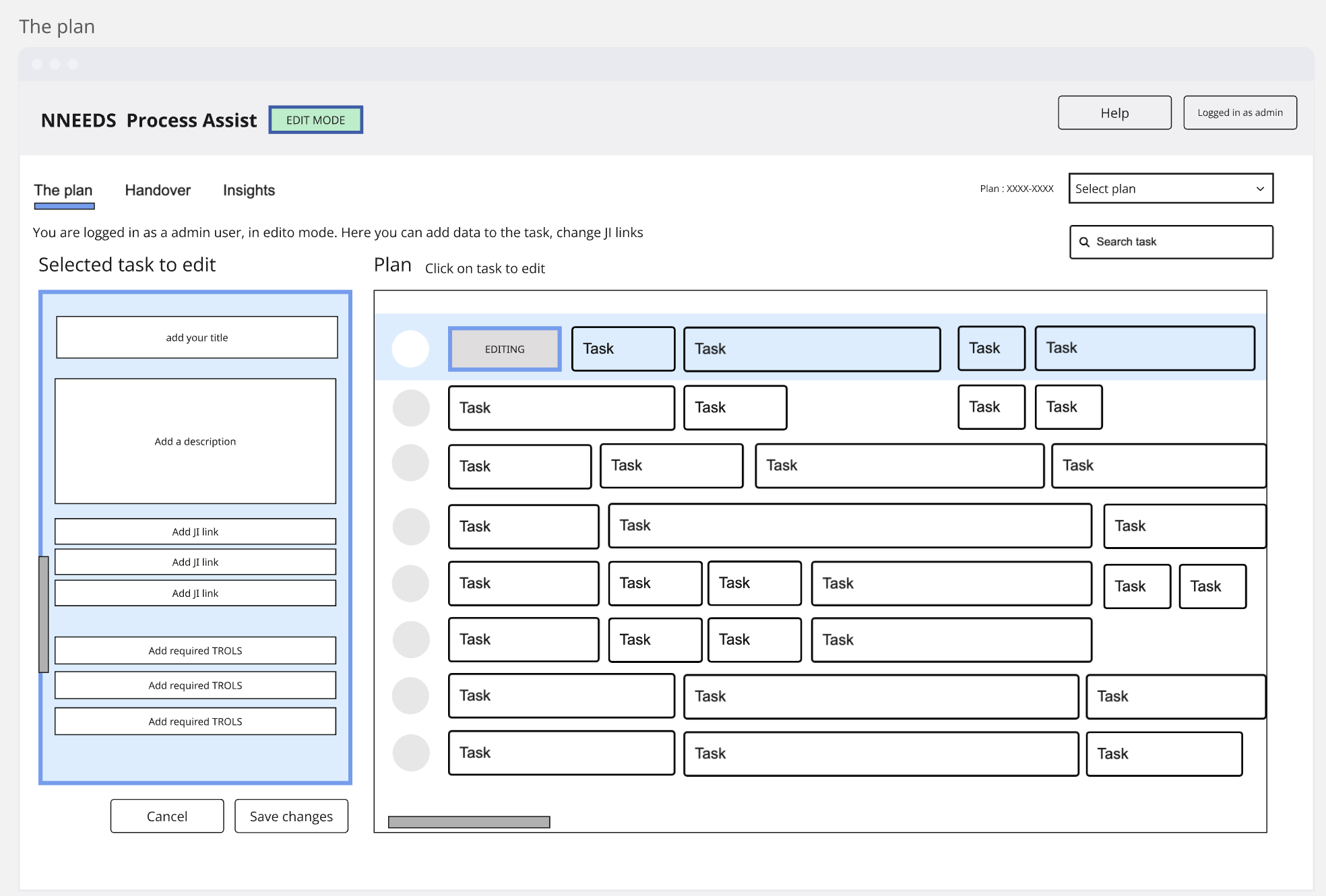
- Designed the solution end to end: user flows, wireframes, prototypes and new features, implementing the Novo Nordisk design system.
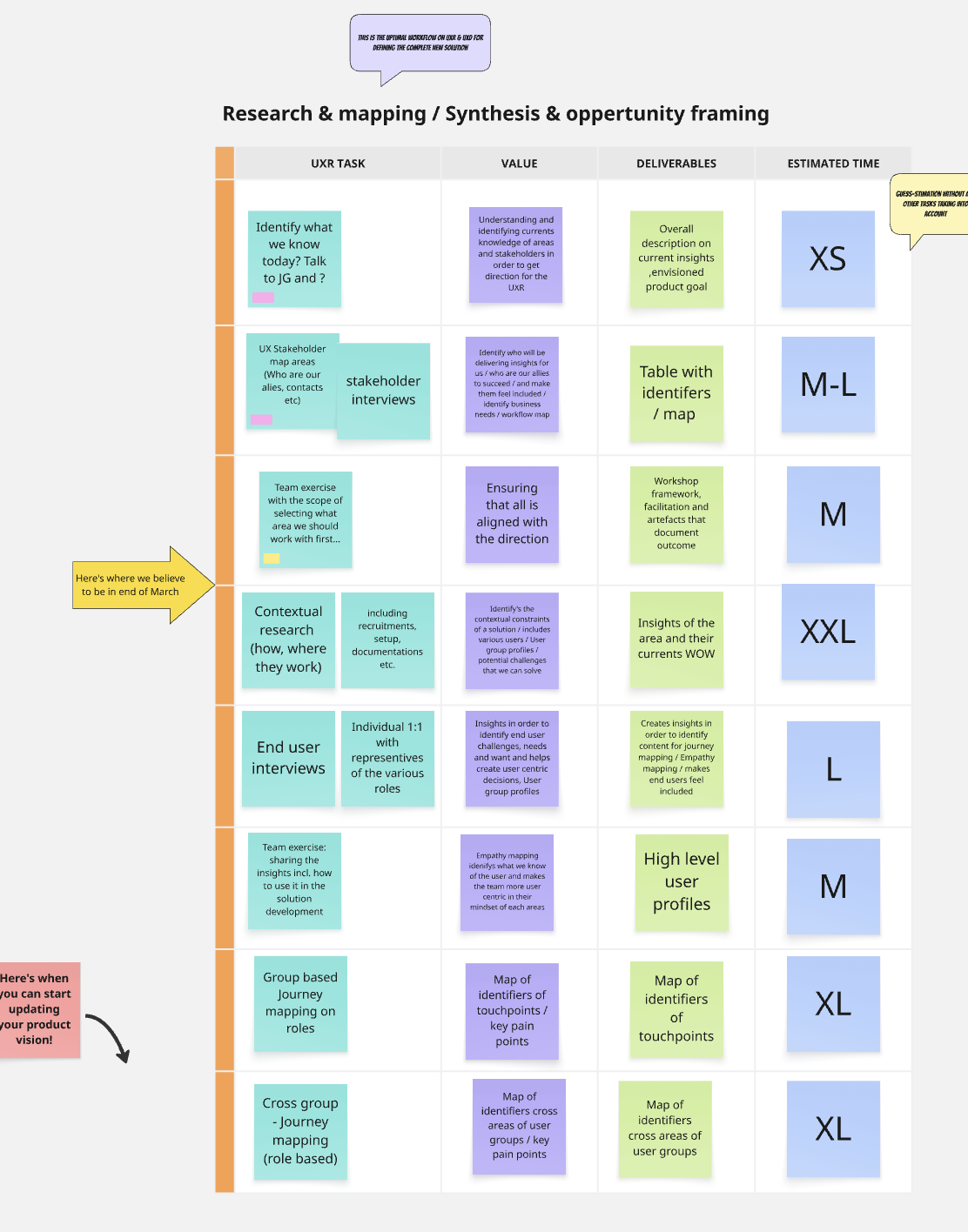
Because there was no existing UX practice on the team, the work started with proving that research could earn its place. I ran interviews and surveys with operators and coordinators, then synthesised what I heard into journey maps and profiles that made the invisible parts of a shift legible to the whole team.
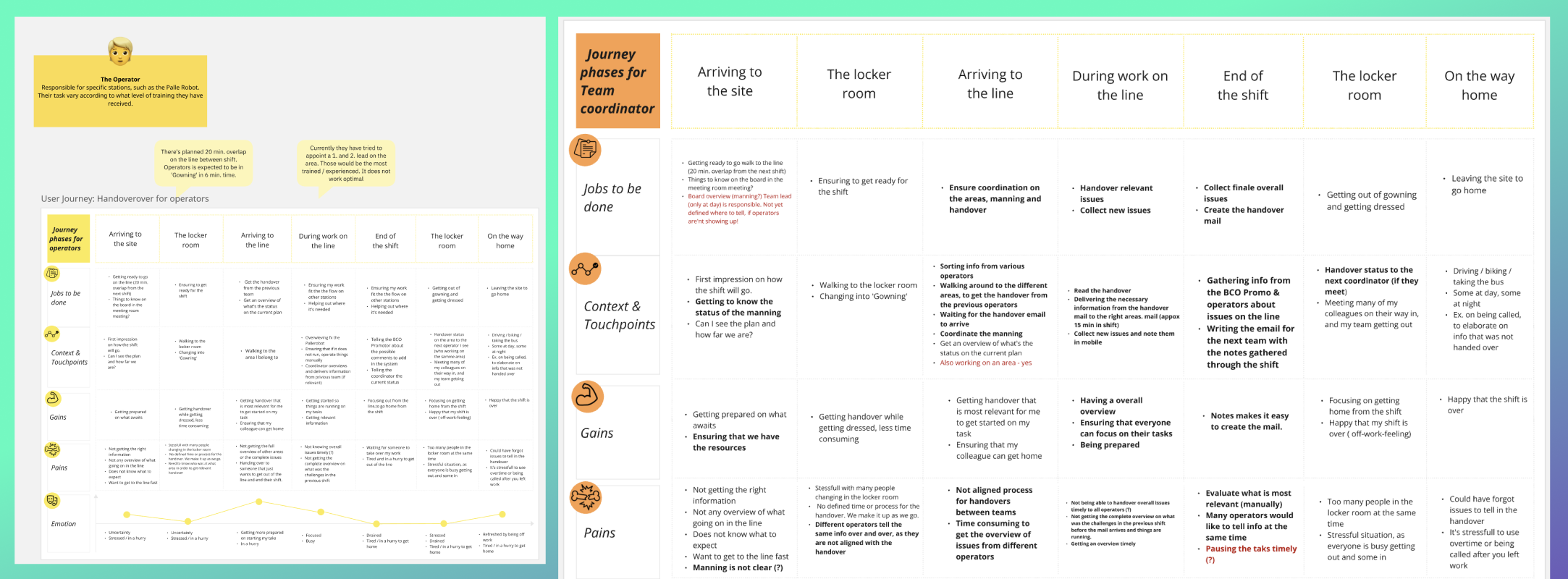
The operator journey map became the spine of the project. Mapping jobs-to-be-done, context and touchpoints, pains, gains and the coordinator's emotional arc across a shift showed exactly where handovers were fragile, and where a digital assistant could carry the load instead of a person's memory.
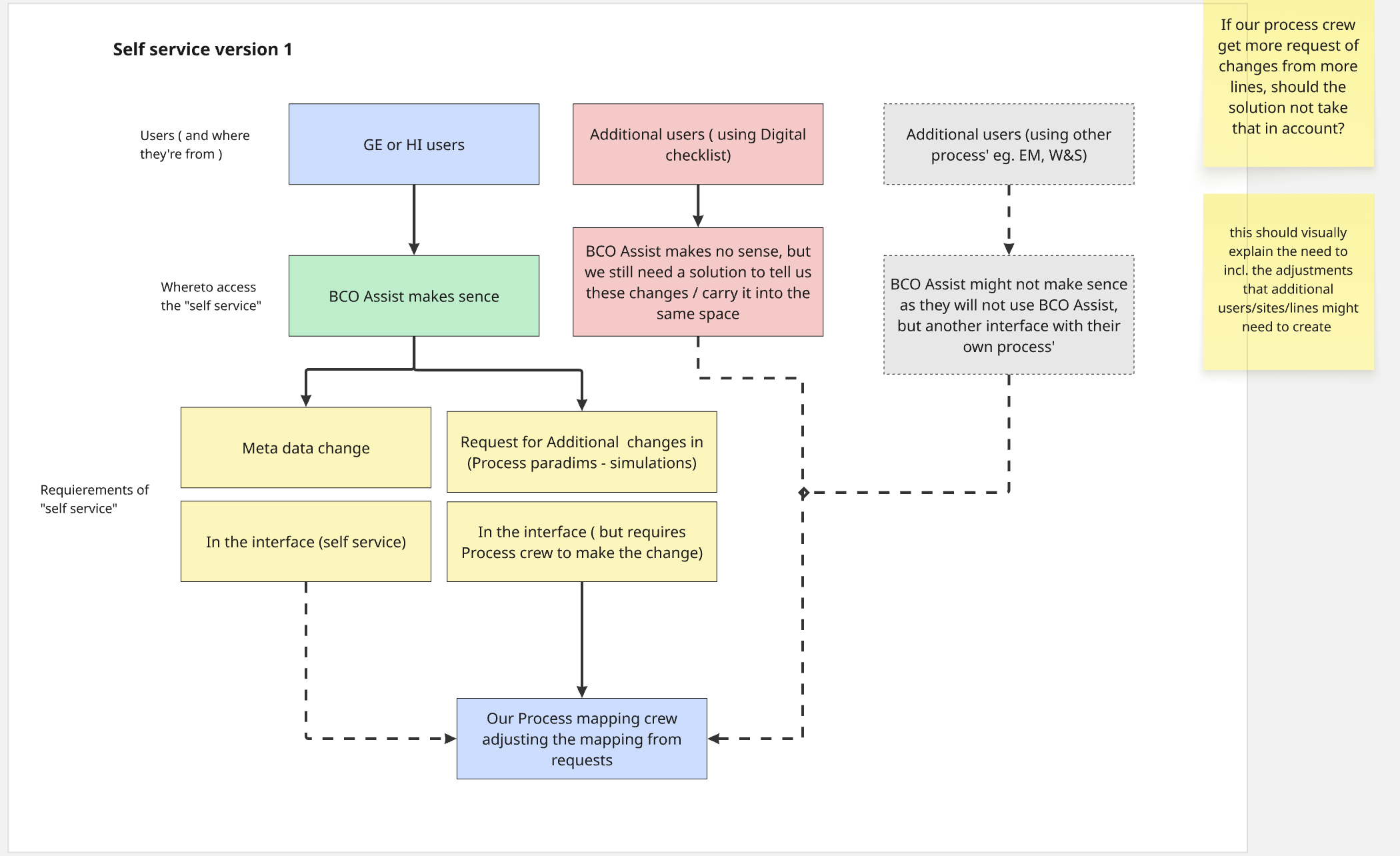
From there I moved into ways-of-working facilitation and Design Thinking sessions to align operators, stakeholders and engineers, then into wireframes, flows and prototypes, validating each step with the operators who would actually use it on production iPads and PCs. I supported much of the research with AI tooling to move faster through synthesis.
Outcome
BCO Assist shipped as a digital shopfloor assistant providing role-based guidance, live task tracking, dependency management, handover support and real-time visibility into the BCO process, built together with operators and tuned for production iPads and PCs.
After implementation at one site, the average duration of a BCO improved by 7%, exceeding expectations, with over 95% adoption among operators. Users reported a clearer overview of tasks and bottlenecks, faster handovers between shifts, and stronger support for continuous improvement through built-in analytics, replacing the old reliance on manual handovers, emails and paper.
The wider win was cultural: the value of UX became visible enough that the team decided to hire a permanent UX designer after my work as their first.
- 7% faster average batch change-over
- 95%+ operator adoption at first site
- 1st UX designer the team ever had